
I find it strange that people are least informed on how things get to where they are. Behind everything that you see around you, there is a story of travel and trade. This is an attempt to make you think and appreciate the process behind things being where they are; it’s called Logistics and it silently oils the machine called ‘the world’ so it can run smoothly.
When you are buying an avocado in your local market, you know this did not grow nearby and is probably coming from somewhere far off. Seldom do people wonder how the bananas from South America or apples from Australia got to their local market before they ripen.
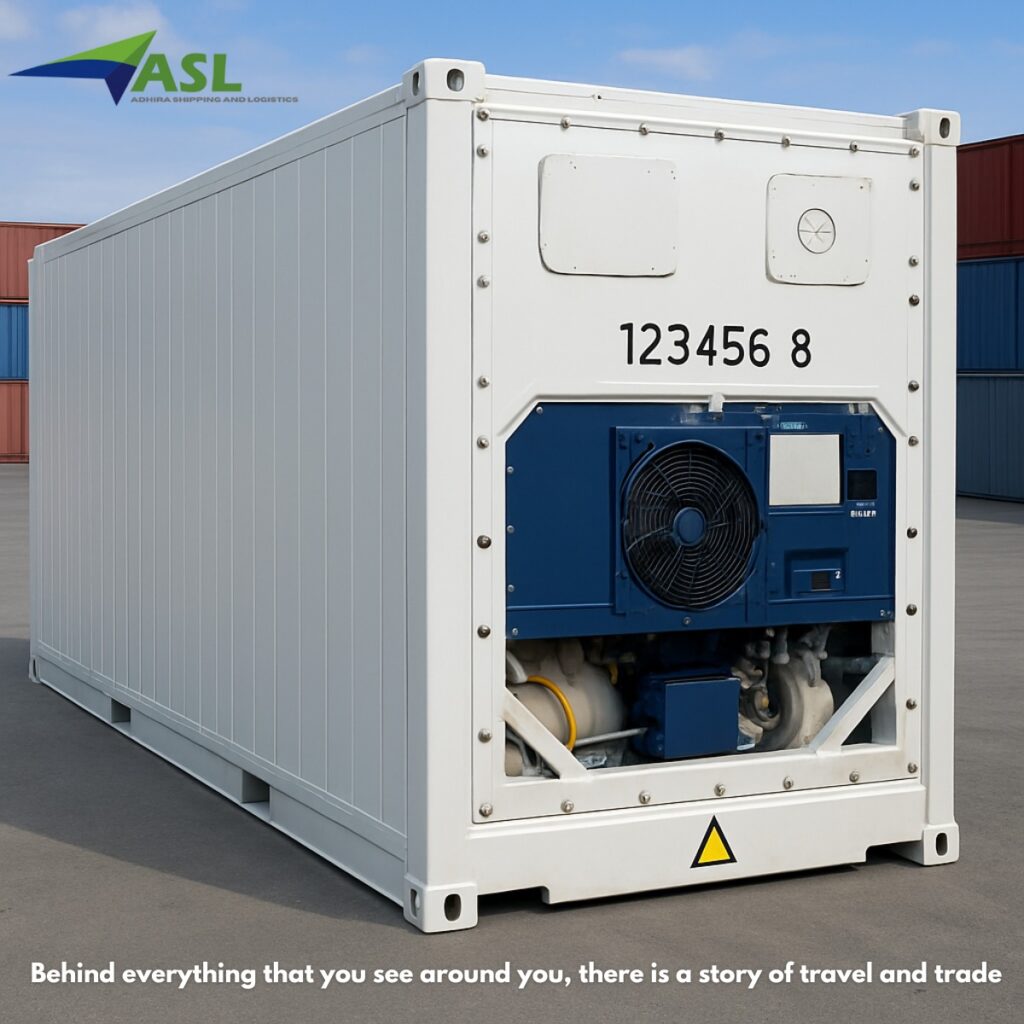
Cold supply chain as it is called – is an expensive and satisfying part of the logistics. To move perishables (fruits, vegetables, juices, meat, milk, cheese, etc), the temperature as well as ventilation of the carriage spaces is controlled. This control is achieved using refrigerated containers which move on regular container ships. These types of containers are easy to handle, monitor and maintain. Large quantities of perishables are sometimes carried on specialized ships called “Reefer” Ships. The perishables are already packed at origin and put in carton boxes which are loaded on to wooden pallets and loaded neatly into a container (or a ship). The temperatures required for the carriage of different perishables is quite scientific and air changes are as important as temperature maintenance. I was captain on Reefer ships and that is how I gained knowledge of the carriage methods for the various cargoes.
In spite of the temperature control, there is a shelf-life for most of the perishables. Packaged perishables are well sealed in special cartons and have an expiry date on them but mention “refrigerate once opened”. Onions are carried in containers without refrigeration and where possible, with a door or window open. Meat is carried frozen beyond minus 25 deg Celsius temperature. More than 1000 varieties of Bananas are available worldwide. The global annual production is around 50 million tons every year. Bananas from Ecuador are kept at 13.2 deg Celsius core temperature during transportation and can be kept unripe for more than 12 months with careful handling of air changes. Think about it – the banana you have brought home today would be ripe in 2 days and was possibly cut in a field somewhere 2 years ago!
Capt Pappu Sastry/ CEO – ASL
