
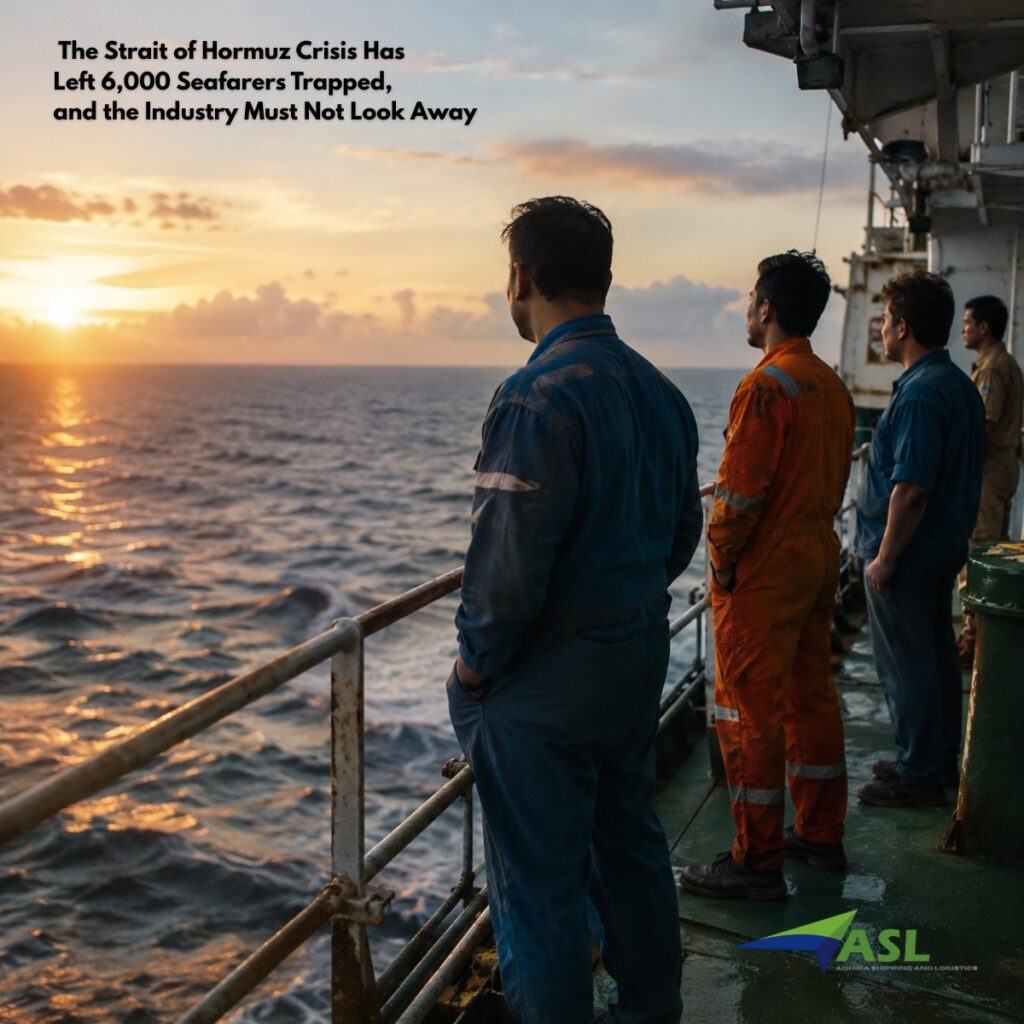
The escalating conflict in the Strait of Hormuz has created one of the most severe humanitarian and operational crises the maritime sector has faced in decades. While geopolitical narratives dominate headlines, the reality for around 6,000 seafarers stranded on vessels unable to transit or berth is far more immediate, personal, and dangerous.
These crew, the backbone of global trade, are now trapped in a conflict zone where commercial ships have already been struck by missiles and drones. Some have been confined onboard for weeks or months, with limited access to medical care, shore leave, or even basic supplies. Others face an even harsher reality: shipowners abandoning vessels outright, leaving crews without wages, support, or a safe route home.
Sanctioned vessels: a humanitarian grey area
For seafarers serving on sanctioned vessels, the situation is uniquely precarious. Many ports will not accept a sanctioned ship unless it is formally declared “in distress”, creating a discretionary barrier that directly affects crew safety and repatriation.
Captain Pappu Sastry, CEO of ASL and GSC, captures the dilemma clearly:
“A vessel in distress can seek refuge at the nearest port, but for sanctioned vessels trapped either side of the Strait of Hormuz, if they are not deemed to be in distress, then it is up to the port whether they accept the vessel or not.”
This is not a theoretical problem. It is a daily operational reality for ship managers trying to secure safe harbour for crews who have no control over the geopolitical status of the vessel they serve on.
Repatriation under strain
Where ports do accept sanctioned vessels, repatriation is typically handled under established mechanisms such as crew‑agency bonds, including the Recruitment and Placement Service License or Philippine Overseas Employment Administration guarantees under MLC rules. These frameworks are designed to protect seafarers when owners abandon ships — but they were never intended to manage a mass‑scale crisis of this nature.
For crews still trapped in the conflict zone, MLC war‑risk provisions apply. They are entitled to a 100% premium on basic wages for the duration of their time in the designated war zone, with a minimum war‑risk bonus of five days. Yet financial compensation, while essential, does not mitigate the physical and psychological risks these seafarers face.
A system stretched to breaking point
The maritime industry is already under strain from overlapping crises in the Black Sea, Red Sea, and now the Strait of Hormuz. The IMO has warned that global shipping is being “taken to the limit”. Civilian merchant ships are not designed to withstand missile or drone attacks, and seafarers are not trained for combat conditions.
The humanitarian dimension of this crisis must be recognised as central, not peripheral. Seafarers are civilians. They are not participants in geopolitical conflict, yet they are bearing its consequences more directly than most.
