
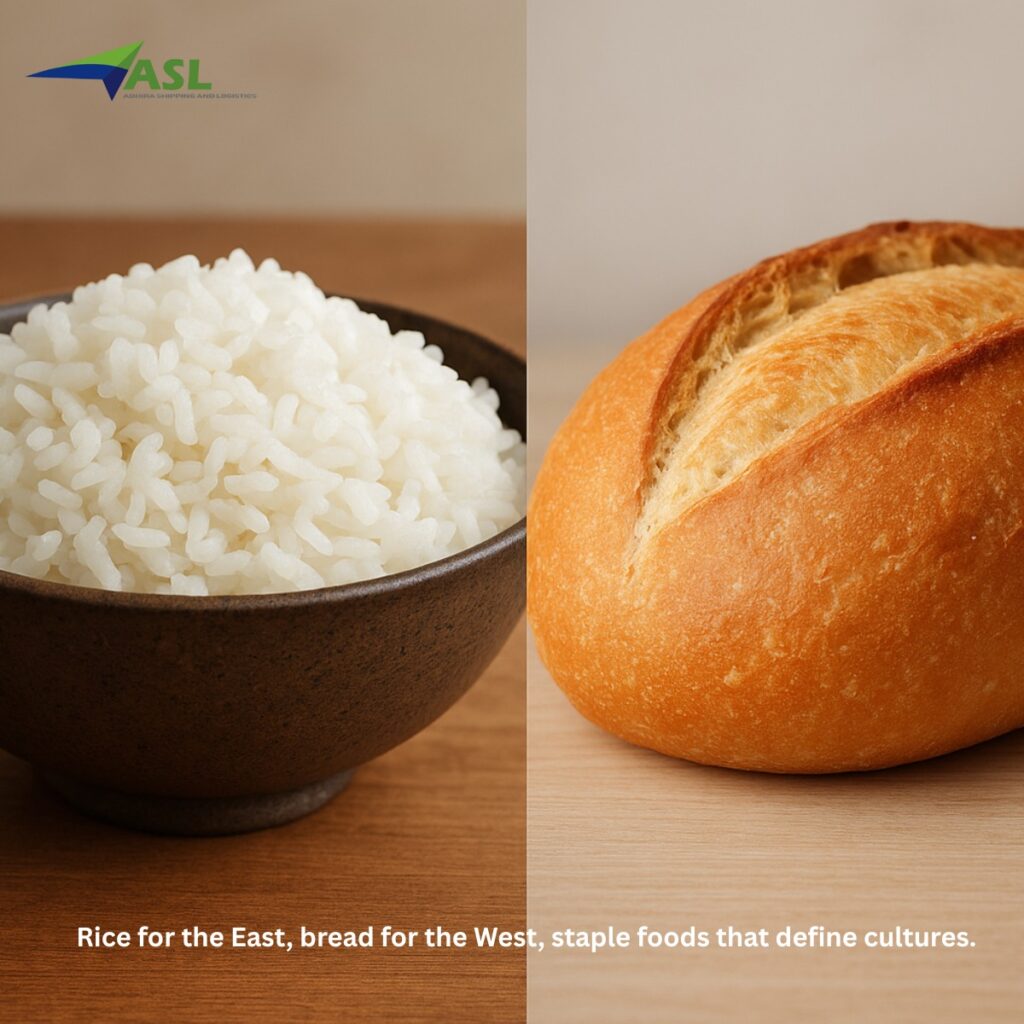
The world can widely be divided into rice eaters and bread eaters. The distinction often refers to the division between Eastern, rice-based cultures, and Western, wheat-based cultures. Historically, the contrast between “rice eaters” and “bread eaters” has been used to highlight deep-seated cultural differences, not just dietary preferences. Globalization is beginning to blur the traditional divide. Globally, the highest cereal production is maize, followed by wheat and then rice. Whilst the global trade of Rice is about 55-60 million tons, the global trade of Wheat is close to 800million tons.
Wheat is the most globally traded cereal in the world. Global trade of wheat is greater than all other crops combined, and it still comes second behind maize in production! Wheat is largely produced in China, India, Russia, USA and France in that order. Wheat is thus transported in large quantities by ships of all sizes, generally in dry bulk cargo ships. The trade is seasonal and even the war was given a break when wheat from Ukraine had to be taken out after the season so that it reaches the European destinations before it is too late.
Rice is possibly the most socio-political commodity in the world. Rice is the staple food for Asia, Middle East, Africa and South America. Rice cultivation requires a particular climate and water table. China, India, Indonesia, Bangladesh and Vietnam are the largest producers of rice in that order. Rice is moved to several of the consuming countries in bags or bulk by ships. The smaller quantities go by containers and the larger quantities move on dry bulk cargo ships where bags of rice (or sometimes bulk) are stowed in the cargo holds of ships. Rice is transported with utmost care protecting it from not just external elements but from rice own properties of absorbing too much moisture and being vulnerable to damage if left wet.
The cereal supply chain is the backbone of global food security, yet it remains a system in delicate balance. The next time you pour a bowl of cereal, have your bread for breakfast or rice for lunch, consider the immense journey those grains have taken to reach you. A journey spanning continent thats fuelled by farmers and enabled by Ships, and dependent on a delicate balance of nature and commerce.
Capt Pappu Sastry/ CEO – ASL
