
How did this get here? Episode 7. CLOTHES
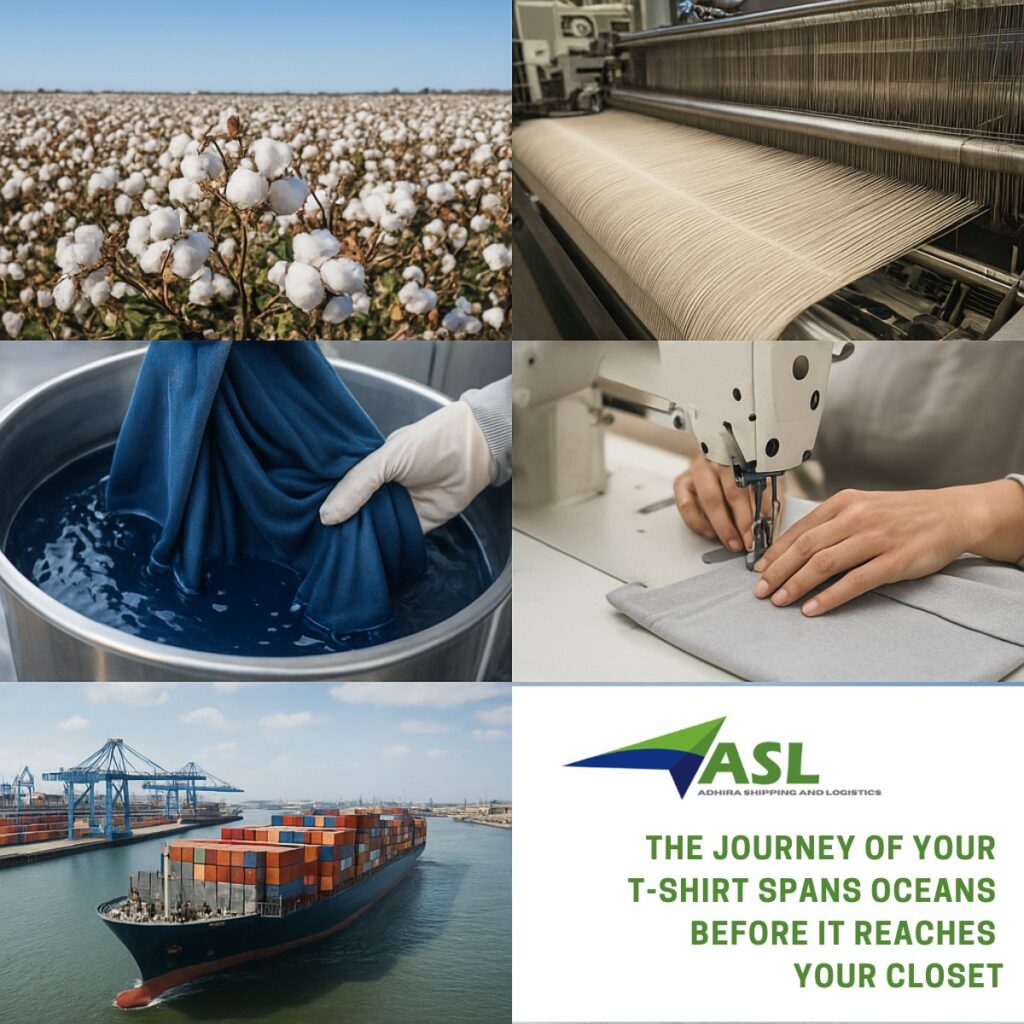
It has been emphasized sufficient times in my series of posts on role of Shipping in your daily lives that over 90% of the world’s traded goods travel by sea. The efficiency of modern shipping is what allows for the “fast” in fast fashion. Look in your closet. The cotton in your t-shirt may have been grown in India, woven into fabric in China, dyed in Bangladesh, and stitched into its final form in Vietnam before landing on a store shelf near you. This economy of scale is why you can buy a high-quality t-shirt for a price that seems disconnected from its international voyage. Without the complex network of container ships crisscrossing the oceans, the fast-fashion, seasonal collections, and affordable apparel we take for granted would simply not exist.
Furthermore, shipping enables the highly specialised, globalised nature of textile production. When this system falters, the consequences are immediate. For the global fashion and textile industry, maritime transport is the indispensable backbone, not just a convenience. As seen during global disruptions, port congestion can lead to empty shelves, delayed seasonal lines, and higher prices for consumers. It reveals the fragile dependency our wardrobe has on this unseen world.
This global movement of textiles is a titanic economic force, with the industry’s revenue measured in trillions of dollars annually. This scale is impossible without shipping, which makes a mockery of the modern marketing term “Free Shipping.” Shipping is the silent, powerful thread that weaves together the entire tapestry of the global garment industry, making the world’s wardrobe accessible, affordable, and endlessly varied. Think about it, Shipping weaves the world’s wardrobes! It is the unsung hero of fashion, ensuring that no matter where you are, the world’s styles are within reach.
Capt Pappu Sastry/ CEO – ASL
